"To Men Named Gregory" by David Pailin Jr.
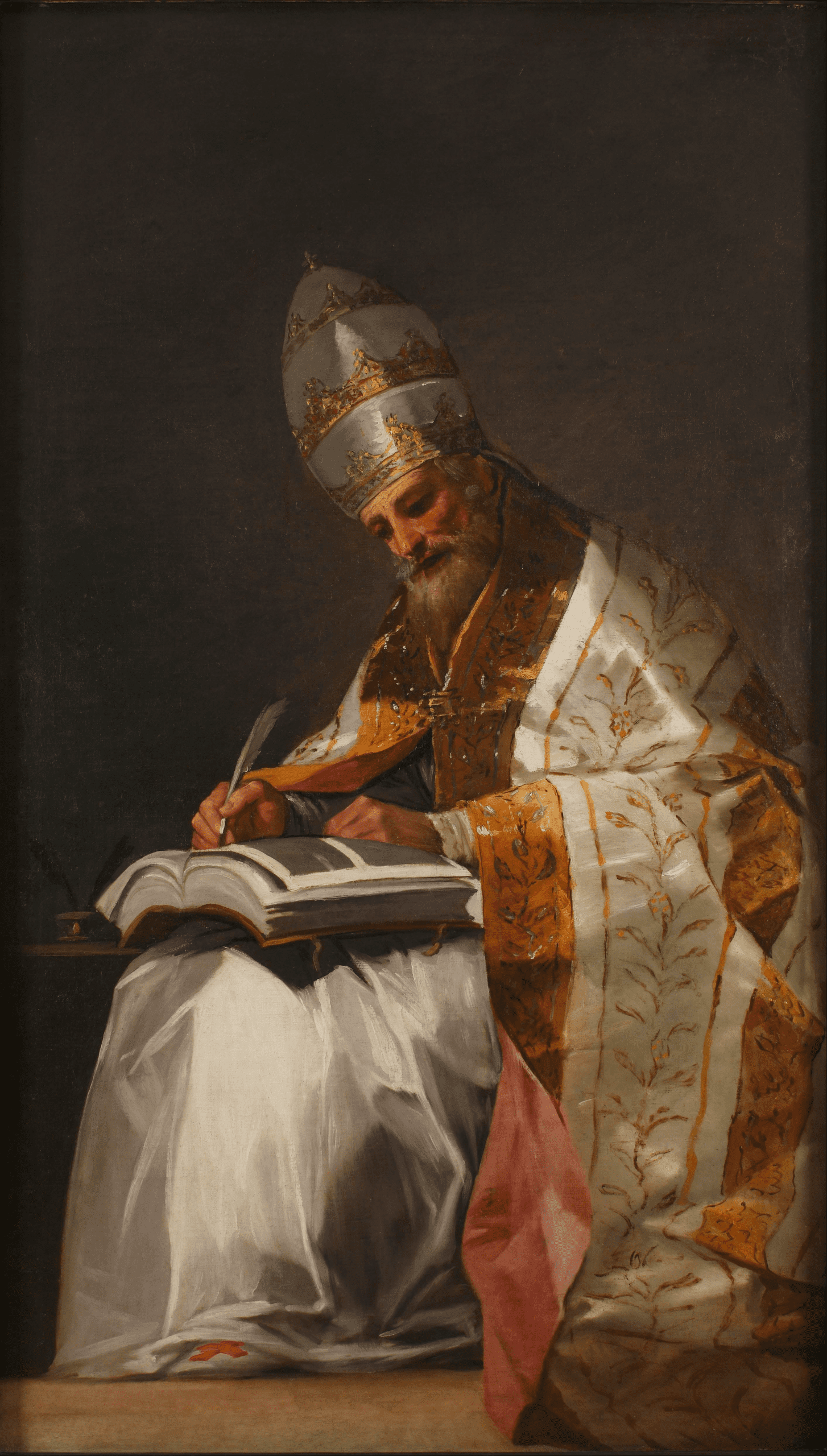
You inherited a name that means watchful. History has supplied popes, saints, scientists, actors, athletes, and artists. What you pay attention to next is up to you.
If your name is Gregory, you have something in common with thirteen popes, several saints, a pioneering geneticist, a Peck, a Hines, a Maddux, and a man who made millions of Americans unusually interested in the anatomy of a house.
That’s a respectable alumni association.
But Gregory carries something more interesting than famous members.
The name itself contains an instruction.
Stay awake.
Before Gregory Was Gregory
Gregory comes from the Greek Gregorios, derived from a word meaning “watchful,” “alert” or “vigilant.”
That’s a surprisingly useful thing to name a person.
Pay attention.
Notice what’s happening.
Don’t sleep through the important parts.
The name became prominent in early Christianity and was carried by several important saints, theologians, and church leaders.
Then came the Gregory who helped make it permanent.
Pope Gregory I, better known as Gregory the Great, became pope in 590.
He was an administrator, theologian, reformer, and prolific writer whose influence helped shape the medieval Western Church. His name became so closely associated with ecclesiastical history that Gregory subsequently became something of a papal franchise.
Gregory II.
Gregory III.
Gregory IV.
Eventually the Vatican made it to Gregory XVI.
Thirteen popes in total have used the name.
If you’re a Gregory who has ever had trouble getting promoted, history has officially eliminated the name as an excuse.
There Aren’t As Many of You Anymore
Gregory is also an interesting case study in how names move through generations.
For much of twentieth-century America, Gregory was everywhere.
According to Social Security Administration data, Gregory became especially popular during the postwar decades, ranking among the country’s most common boys’ names during its peak years.
Then something happened.
Parents moved on.
Gregory increasingly became Greg, and newer generations became Liam, Noah, Oliver and Theodore.
That isn’t necessarily bad news.
James and Michael have millions of competitors.
Gregory has scarcity working in his favor.
It’s recognizable without being ubiquitous.
Traditional without sounding ancient.
Formal enough for a courthouse.
Greg enough for the barbecue.
And it comes with one of the more useful meanings available.
Watchful.
Now let’s see what the alumni did with it.
The Gregory Hall of Fame
There are fewer obvious selections than with Michael or James, which makes the roster more interesting.
The Original Heavyweight: Gregory the Great
Pope, theologian, administrator and saint.
When subsequent popes start borrowing your name, you’ve done reasonably well with it.
Science: Gregor Mendel
I’m admitting Gregor.
The Augustinian friar’s experiments with pea plants established fundamental principles of heredity and helped lay the foundations for modern genetics.
Imagine spending years quietly studying peas and eventually forcing every high-school biology student to learn your name.
That’s legacy.
Film: Gregory Peck
Roman Holiday. The Guns of Navarone. Cape Fear. To Kill a Mockingbird.
Peck’s portrayal of Atticus Finch became one of American cinema’s enduring images of principled masculinity.
Tall, composed, articulate and difficult to intimidate.
Gregory represented well.
Baseball: Greg Maddux
Maddux is perhaps the perfect representative of the name’s original meaning.
Watchful.
Four consecutive Cy Young Awards.
Eighteen Gold Gloves.
More than 3,000 strikeouts.
He became legendary not primarily by overpowering hitters, but by understanding them.
Location.
Movement.
Sequence.
Tendency.
Attention.
While other pitchers could overwhelm you, Maddux often seemed to know what you were going to do before you did.
Very Gregory.
Basketball: Gregg Popovich
I’m allowing the extra G.
Five NBA championships as head coach of the San Antonio Spurs and one of the longest, most successful coaching tenures in professional sports.
His career is another argument for observation over spectacle.
Study people.
Develop them.
Build systems.
Adjust.
Win repeatedly.
Theater: Gregory Hines
Actor, singer, dancer and one of the great tap performers of his generation.
Hines carried an American art form forward while making extraordinary technical difficulty look conversational.
That’s harder than it looks.
Usually a sign that someone is very good.
Television: Greg Daniels
Creator or co-creator of King of the Hill and Parks and Recreation, developer of the American version of The Office, and a writer whose fingerprints are on an enormous amount of modern television comedy.
Millions of people know Michael Scott.
Far fewer know one of the people responsible for putting him there.
There is something appropriately Gregory about that.
Business: Gregory Maffei
A longtime executive associated with Liberty Media and major media, communications and entertainment assets.
Not the household-name businessman.
The man operating behind household names.
Again:
Very Gregory.
Architecture and Television: Greg Leakes
Actually, no.
That’s exactly how bad Hall of Fames happen.
We fact-check around here.
Instead, let’s create a category Gregory has earned through sheer cultural persistence.
The Greg Division: Greg Gumbel
A broadcasting career spanning decades across the NFL, NCAA basketball, Major League Baseball and the Olympics.
Sometimes excellence is not about becoming the spectacle.
It’s about becoming the trusted person explaining it.
Wild Card: Gregor Clegane
Absolutely not.
Some Gregorys are examples.
Others are warnings.
The Advantage of Paying Attention
There’s a pattern hiding in this particular Hall of Fame.
Mendel watched peas.
Maddux watched hitters.
Popovich watches players and systems.
Daniels watches human behavior closely enough to turn awkwardness into comedy.
Hines listened for rhythm.
Gregory the Great watched an institution moving through a collapsing political world.
Different fields.
Same advantage.
Attention.
We tend to imagine successful people possessing some enormous visible gift.
Strength.
Charisma.
Intelligence.
Speed.
Capital.
Talent.
But attention may be one of the most undervalued advantages available.
The person paying attention notices when the room changes.
When an employee is struggling.
When an opportunity appears.
When a relationship needs maintenance.
When someone is lying.
When the numbers stop making sense.
When enough is enough.
When something beautiful is happening and everyone else is staring at a phone.
You can’t respond intelligently to something you never noticed.
Perhaps the Greeks were onto something.
Be Gregory
Eventually every name develops two definitions.
There is the one history gives you.
And there is the one people learn from knowing you.
Gregory began with a good one:
Watchful.
But vigilance isn’t paranoia.
It isn’t spending your life waiting for something to go wrong.
It’s presence.
It’s noticing what deserves your attention and having enough discipline not to waste all of it on things that don’t.
Maybe you become a scientist.
Maybe you run a company.
Maybe you coach.
Maybe you make films.
Maybe you become a great husband, father, brother or friend.
Maybe your most important accomplishment comes from noticing something everyone else overlooked.
You don’t need Peck’s presence.
Mendel’s peas.
Maddux’s command.
Hines’ feet.
Popovich’s championships.
Or thirteen papal elections.
You need your own reason for someone to hear Gregory and think specifically of you.
That’s the advantage of inheriting a name that isn’t currently everywhere.
There’s still room.
Respect the saints.
Study Mendel.
Watch Peck.
Learn from Maddux.
Appreciate Hines.
And pay attention.
The name has been telling you to all along.
Be your own Gregory.